Table of Content
Slab foundations are one of the most affordable foundation options for manufactured homes. While crawl space foundations provide some wind resistance, they are not intended for areas prone to hurricanes. Almost all of these include a contractor coming to pour cement. Piers on the other hand, are plastic pads that support the home along the frame. It is very rare to put a mobile home on a basement, as this is much easier with a purpose built modular home.
You might think leaving the space between your mobile home and the foundation open will improve airflow and keep your mobile home drier. Bare earth is a poor foundation for your mobile home, and contact with the ground exposes your mobile home to dampness and vermin. Unprepared ground is subject to “heave” – local movement up and down resulting from different moisture levels, drying out, and freezing. You expect your foundation to last for the life of your mobile house , so it makes sense to invest in a professional to give you a solid foundation. A contractor has experience which assists in surveying the site, choosing the right concrete formula, site preparation, local conditions, and potential hazards. Older homes are lighter than newer homes; as an approximate guide, older homes (pre-1980) are 40LBS/sqft, and newer ones are 50 LBS/sqft.
Blocking Plan
Ground anchors are rated by working load, which is the maximum load for design purposes. The ultimate load is the working or design load multiplied by the safety factor of 1.5. Anchors, or tie-downs, are used to anchor the home’s frame to the earth or the foundation.
In places, where the ground is prone to freeze during winters, a slab foundation is poured over piers to add more stability. A slab foundation without piers is called floating a floating slab. If your manufactured home foundation meets the FHA/HUD & VA standards, you will be awarded an Engineer's Foundation Certification to guarantee that loan guidelines are met. Engineer's foundation certification is also required to conclude the buying, selling, or refinancing of your home.
Manufactured Homes Foundation Requirements
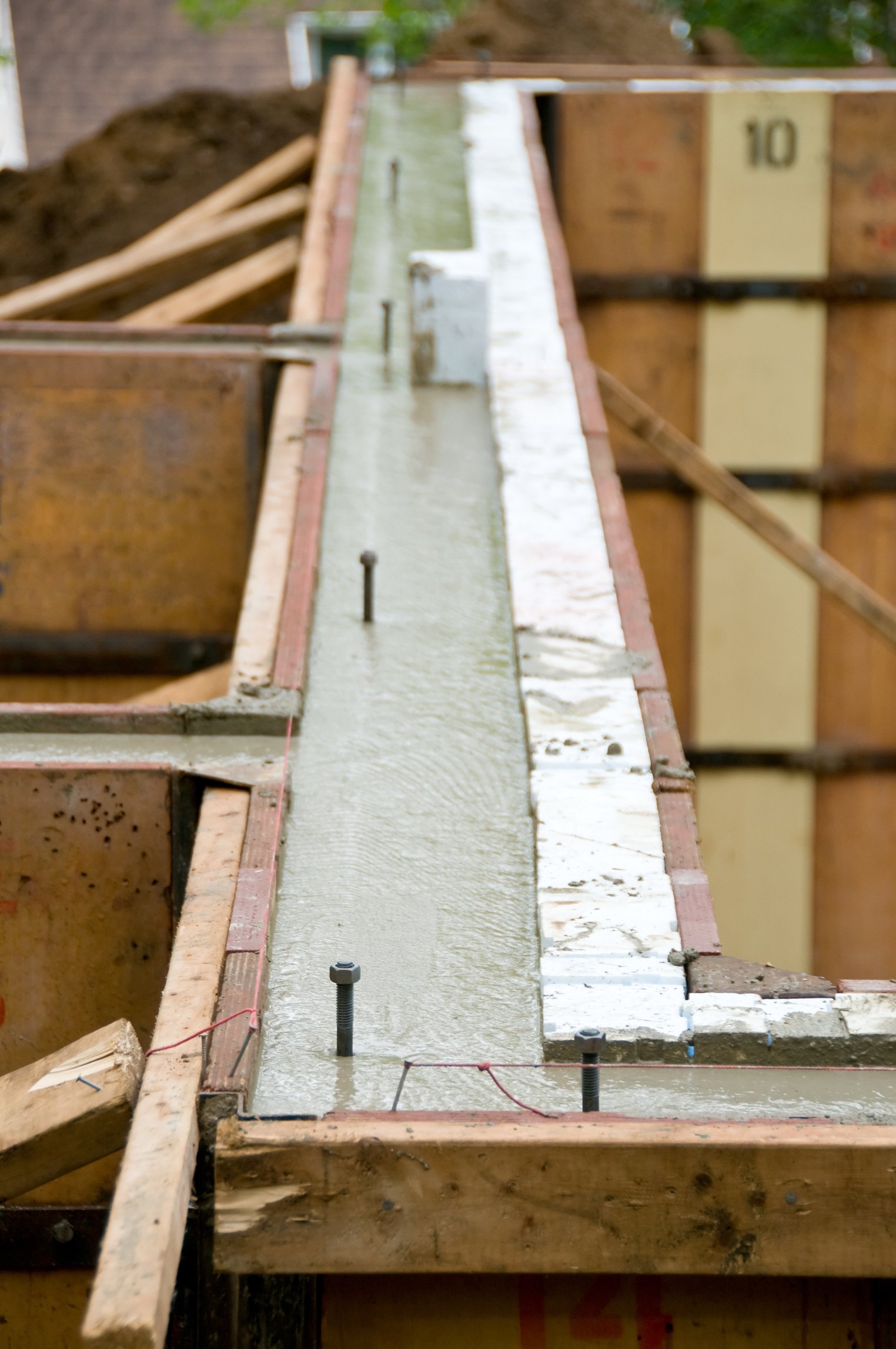
Slab foundations for manufactured homes consist of a 4 to 6 inch deep flat, concrete foundation, with another 4 to 6 inches of gravel or sand beneath it. Instead of the floor of the home, a slab foundation acts as support for the home. In areas where the ground freezes during the winter – like West Michigan – slab foundations are often poured over piers to add stability through freezes and thaws. If a slab foundation is poured without piers, it is called a floating slab. As the name suggests, crawl space foundations create a 48 inch deep crawl space within the foundation of the home.
Most issues that occur to manufactured homes can usually be traced to a home that’s unlevel or was not properly installed. Think of the national HUD standards as being the base regulations. Their standards are nationwide, but each state has its own higher standards based on its average soil and climate environments. The manufacturer’s installation manual will meet all HUD standards, but it is usually much more detailed and will have higher regulations, so it should always be followed. Education and inspection are the two best defenses against improper manufactured home installation and setup.
Types of Anchors and Tie-Downs
Live load – the added weight of moveable furniture and people. Add reinforcing bars or rods to prevent ground movement from cracking the slab. Tethering bolts may secure the house in place to stop it from slipping or sliding off the foundation in severe weather. Map on Decks.com which measures “extreme frost penetration based upon state averages” you could be looking at something like 5-10 inches when it comes to frost penetration. The home is lowered down on the piers and fastened to them.
The foundation is essentially what the home is laid upon and there are various types of manufactured home foundations on the market. A foundation is required for mobile homes to provide the necessary stability and support for the structure, even though they are already built. There are different types of manufactured home foundations available, and the mobile home foundation is essentially what the home is built on. You can generally figure about $3,000 per section to install an average home onto your foundation – either onto a concrete slab or a crawl space. Hence a Single Wide will cost around $3,000 and a Double Wide around $7,000 – $12,000 depending on the size. A Double wide will be bolted together, anchored to your foundation and the ridge cap installed on the roof where the two sections come together.
Consider the area and its surrounding amenities but remember that this all influences the price of the permanent lot. In addition, most counties require a building permit to be obtained prior to physical renovation. This permit will take time and money to obtain but is necessary to the process. In reality, the housing market is constantly fluctuating. As a result, keeping the value or increasing the value of your home is important in today’s economy.

Plus, the infrastructure for your utilities must remain within the walls of your mobile home and your foundation. Do your due diligence to determine what the requirements related to frost line are where you’re planning to place your mobile home. There can be different requirements depending on where you are in a state. While you may be able to find the information online, you can also try calling your local government officials to check with them. Each manufactured home model should specify the intervals at which piers should be placed. Wooden planks are used to create the frame of the foundation.
If you want your manufactured or mobile home to have a chance at appreciating in value rather than depreciating, permanently affix it to a foundation. Like the pier foundation, both single wide and double wide manufactured homes can be placed on this type of foundation. According to California manufactured housing regulations, you can choose among different types of foundations. Frost-protected shallow foundations are increasingly common and are approved by the IRC. A permanent foundation is a foundation which is built of durable materials and is built on site.
Permanent foundations, like basements and crawl spaces, cannot ever get removed to place somewhere else. Permanent foundations, well, allow a manufactured homeowner to affix their home to its foundation permanently. Your financing qualifications depend on a combination of factors, like your home’s foundation and the land it’s placed on. Permanent foundations have specific requirements, and some of them are area-specific. They require more time and materials, leading to permanent foundations being the most costly option. If you don’t plan on moving your home anytime soon, or you own the land it’s on, permanent foundations are usually the way to go.
I would also call up your local manufactured home dealership and your local mobile home supply stores and ask if they have any recommendations. Please call references and check backgrounds on anyone you find online. Every new manufactured home has a 1-year warranty but that only covers the building of the home. There are no national regulations or laws mandating the installation of the home even though that’s where the majority of issues stem from. Stay on them and create a paper trail so that there is clear proof of your complaints. However, with installers, there really is no recourse other than small claims court and BBB .


No comments:
Post a Comment